Tuesday, March 1, 2011
For Sara-Lane: Leonard Nemoy
Leonard Nemoy (yes, Spock from "Star Trek") has launched a quite successful career as a photographer in recent years. One of his series is called "The Full Body Project". In this series, he focusses on nudes of plus-sized women. I know this doesn't related perfectly to what you're wanting to do with your series of 50, but there are similar concepts. Nemoy wants to show us the natural beauty of bodies that are usually excluded from fine art nude figure study photography. Rather than posting a bunch of nudes here, I give you this LINK to his page dedicated to "The Full Body Project." You can even read his artist's statement there.

For Caroline: Daniel Kramer
These are a few images from documentary photographer Daniel Kramer. This is a series he did called "Prized Possessions". He went out and found homeless people on the street and asked them to show him their most prized possession.


For Allison: Bruce Gilden

Here's the guy I mentioned in class. His name is Bruce Gilden, and I love his work. Above is an image showing his stealthy and surprise approach.


Thursday, February 24, 2011
Magnum Partners With Leica For A Big Project
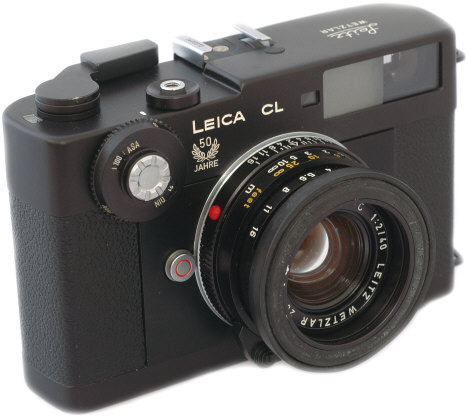
Leica (a British camera manufacturer) and the documentary photographer's group Maganum are partnering up for an exhibition. Read about it HERE.
Thursday, February 17, 2011
Exhibitions To Consider Submitting To
Click on the title of any of the below exhibitions for details:
For Allison: Taylor Martin
Allison,
These are photographs by Memphis photographer Taylor Martin. He did this series back in 2007 in which he did his best to mimic famous self-portraits by famous photographers/artists. Below, I have given you Martin's photograph and the original on which he based his work. In each case, he is trying to take on the personality of the original artist.
Chuck Close


Robert Mapplethorpe


Cindy Sherman


Bruce Nauman


Familiarizing Yourself With Postmodernism
Postmodern Art - a movement in Western art, spanning from the late 1970s until the present, which rejects the key ideas of modernism.
*The postmodern philosophy of Jacques Derrida and Michel Foucault who reject the concept of “binaries” or “either-or” classifications.
*Artists felt that modernism had become purely “art about art”. It was too focused on itself, and had therefore become elitist. Postmodern artists wanted to explore personal expression, social causes, and rediscover their art historical legacy.
*The art world was (and still is) flourishing. Art has become a valuable commodity. Some postmodern artists want to draw attention to this.
*Skepticism and humor.
*Postmodern artists identify themselves within an art historical context.
*A blending of cultural influences.
*Pluralist ideology.
*Much postmodern art seeks to tear down the establishment of “white male” dominance in Western art by focussing on issues of race, feminism, and sexual orientation.
*Pop culture and “lowbrow” influences are just as relevant to postmodernists as established “fine art” influences.
*The use of text as the central artistic element.
*A return to traditional themes and techniques as a rejection of modernism.
Pastiche - a literary, artistic, musical, or architectural work that imitates the style of previous work or an artistic composition made up of selections from different works.
Bricolage - the construction or creation of a work of art from a diverse range of things which happen to be available.
Pluralism - a postmodern movement in art that assumes the cultural context of art should be all encompassing in its respect for the art of the world's wide variety of cultures and artistic styles, and that diverse cultural and stylistic influences can coexist in a work of art.
Appropriation - an artistic concept in which an artist uses an image already in existence and places it in a new context in order to give it new meanings.
What brought about the Postmodern movement?
*Modern Art was founded on “breaking the rules.” Eventually there were no more rules in art to break.*The postmodern philosophy of Jacques Derrida and Michel Foucault who reject the concept of “binaries” or “either-or” classifications.
*Artists felt that modernism had become purely “art about art”. It was too focused on itself, and had therefore become elitist. Postmodern artists wanted to explore personal expression, social causes, and rediscover their art historical legacy.
*The art world was (and still is) flourishing. Art has become a valuable commodity. Some postmodern artists want to draw attention to this.
What are some of the characteristics of Postmodern art?
*Appropriation: the use of already existing imagery presented in new ways to give new meaning.*Skepticism and humor.
*Postmodern artists identify themselves within an art historical context.
*A blending of cultural influences.
*Pluralist ideology.
*Much postmodern art seeks to tear down the establishment of “white male” dominance in Western art by focussing on issues of race, feminism, and sexual orientation.
*Pop culture and “lowbrow” influences are just as relevant to postmodernists as established “fine art” influences.
*The use of text as the central artistic element.
*A return to traditional themes and techniques as a rejection of modernism.
Some Note-Worthy Postmodern Artists
Jean-Michel Basquiat

Gajin Fujita

Jeff Koons

Michael Ray Charles

Barbara Kruger

Subscribe to:
Posts (Atom)